Green Turtle
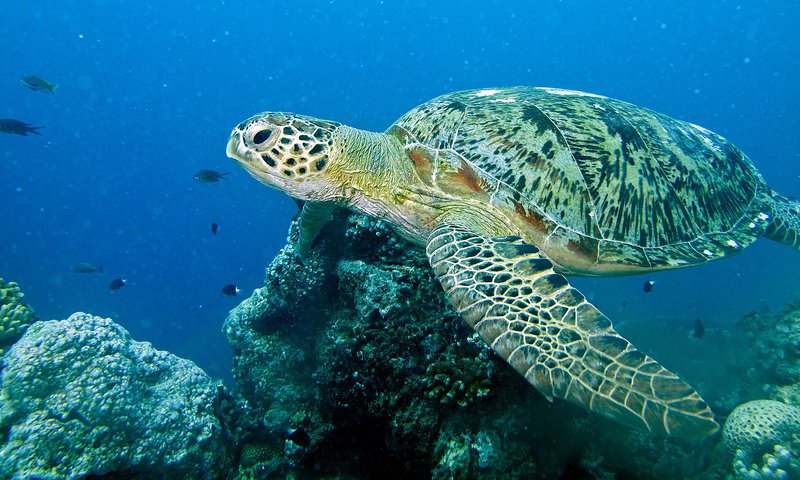
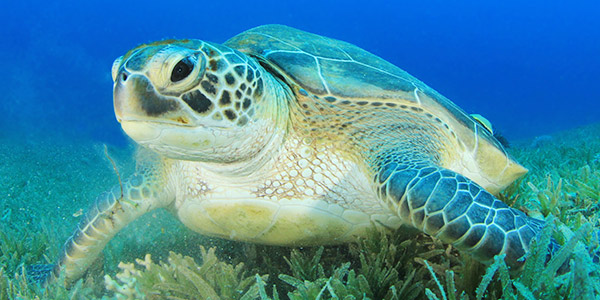
The Green Turtle is the most commonly found turtle in Sri Lanka. They are also found in the Indian, Pacific and Atlantic Oceans. Their English name refers to the colour of the fat found under their shells, which unfortunately is used to make turtle soup. Luckily this practice is less common today. Young Green Turtles are mainly carnivores. Adults however are herbivores, feeding only on marine vegetation with the help of their finely serrated jaws. They grow to a maximum length of 1m and can weigh 250kg. Adult females lay between 120-140 eggs at one time. Green Turtles are regularly found on the beach at night close to the KSTCP. They tend to nest only every few years but when they do they lay several times in one season
The turtle actually inhabits different types of habitat during different stages of its life. For example, the young typically spend their first 5 years in pelagic waters, rarely being seen. Mature individuals prefer to inhabit lagoons, inshore bays, and shoals with seagrass meadows. The only natural predators of adults appear to be large sharks and humans (no surprise on that one). The young, however, are often easy prey for shorebirds, marine mammals, and even crabs.
Mostly Found In
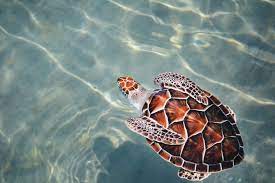
Hawksbill Turtle
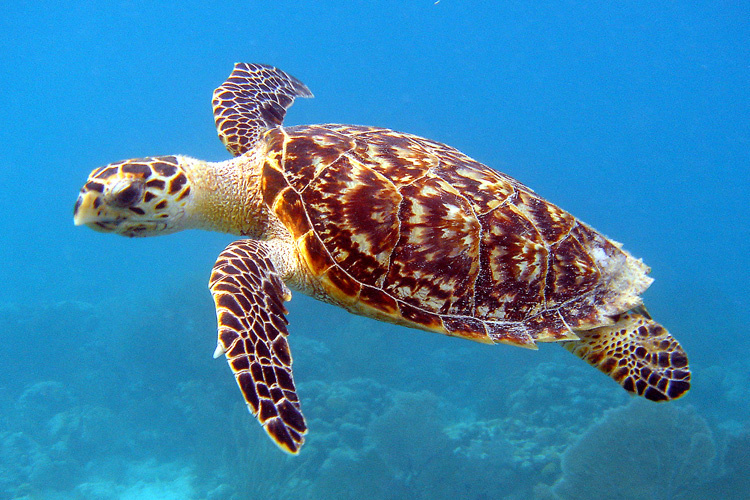
The critically endangered Hawksbill Turtle is rarer than the Green Turtle. It is also much smaller reaching a maximum length of 90cm and weighing 50-70kg.
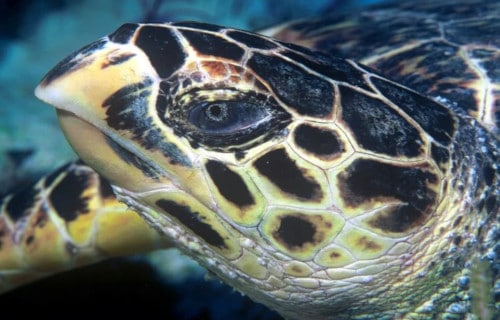
The hawksbill's beak, which resembles a bird and is employed to hunt prey hidden in small cracks, gave rise to its English name. It frequently travels to seas in Sri Lanka and other tropical and subtropical regions.
Despite being a lesser species of sea turtle, this one is recognized for its exquisite shell, which is composed of 13 symmetrical sections and is vividly colored. Sadly, because there is no other supply of "tortoise-shell" used for commercial purposes, it has become a target for dealers.
They mostly feed on sponges, which they pull from cracks in the reef with their short pointed beaks, however they also devour sea anemones and jellyfish. Sea turtles are the surviving descendants of a species of reptiles that have roamed our oceans for the last 100 million years. They are an important connection in marine ecosystems, contributing to the health of coral reefs and sea grass beds.
Mostly Found In
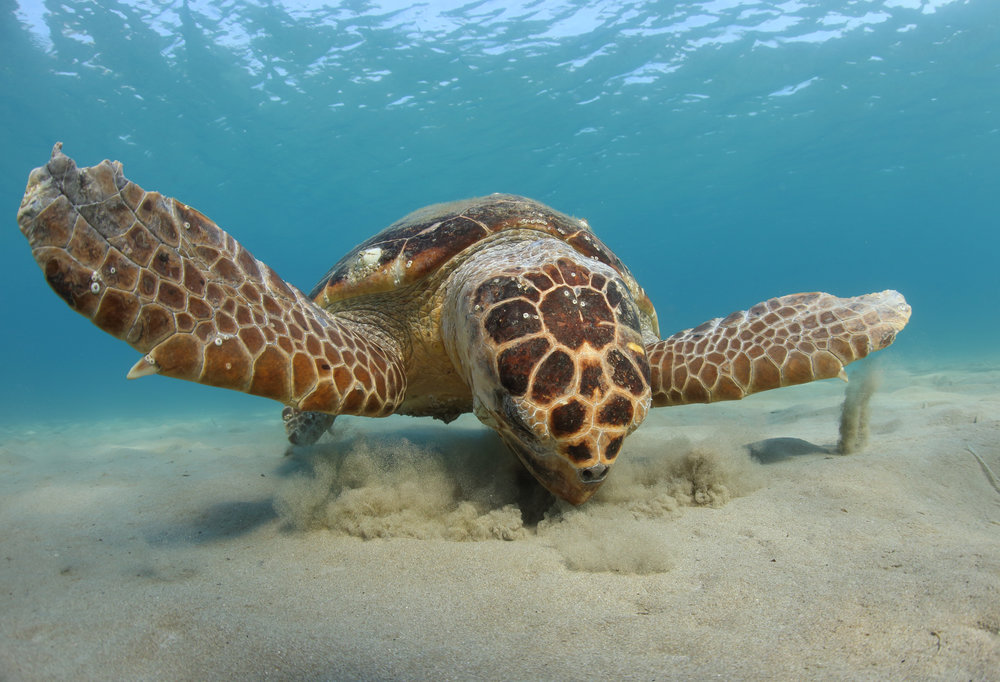
Loggerhead Turtle
The Loggerhead Turtle is uncommon in Sri Lanka and more frequent in the East Coast of the United States. As their name implies, they are often red and brown in color, and their huge head makes them easy to recognize!
The majestic marine reptile is still the largest hard-shelled turtle, which is very remarkable. Furthermore, in terms of raw size, only the Leatherback, which lacks a protective shell, is larger than it.
It weights between 170 and 200kg and reaches a height of 1m. They are mostly carnivores, and their powerful jaws are perfect for tearing apart mollusks and crustaceans.
Climate change and habitat disturbance are two of its biggest risks.
Mostly Found In
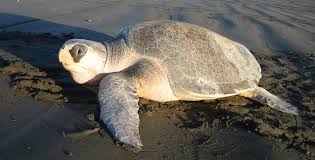
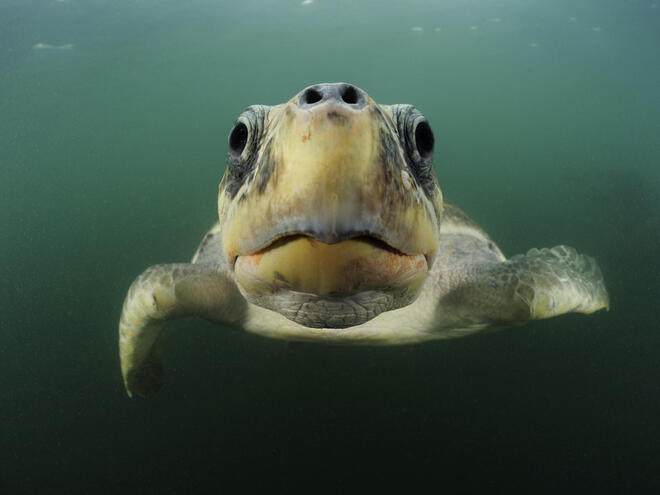
Olive Ridley Turtle
This turtle is threatened because its population is dependent on the security of a few beaches in the Indian, Pacific, and Atlantic Oceans. They have historically been frequently hunted for their flesh and skin.
The Olive Ridley is the smallest of the sea turtles and one of two kinds of ridley turtles, reaching a maximum size of 65cm and weighing 35-45kg. It gets its name from its olive/rust colored shell.
Olive Ridley Turtles lay their eggs on Kosgoda Beach every year, sometimes more than 150 at a time. They are omnivores, consuming crustaceans, fish, and some seaweed.
Adults have few natural predators, with the exception of certain sharks and orcas.
Mostly Found In
Leatherback Turtle
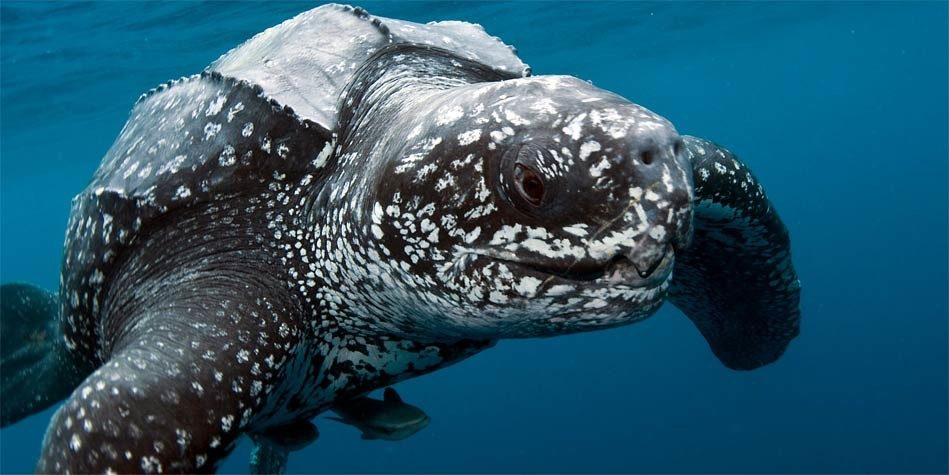
This severely endangered turtle is the biggest of the five kinds and is extremely difficult to find in Sri Lanka. It is still on the verge of extinction.
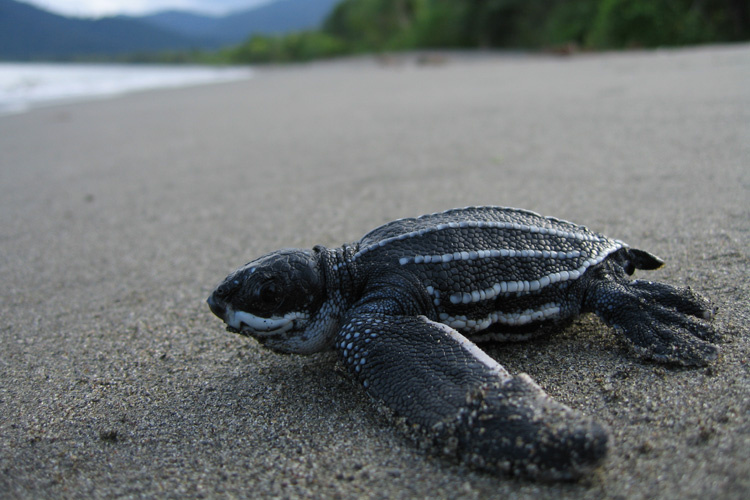
It is easily recognized by its large front flippers and distinctive black and white striped shell; its carapace is really a layer of thin, durable, rubbery skin speckled with millions of bone plates, giving it a leathery look. It is the only marine turtle without a hard shell!
Furthermore, they have a unique blood circulation system for a cold-blooded reptile, which allows them to keep their blood warm even in cold waters by utilising metabolic heat generated by muscular action.
The Leatherback may grow to be 3m long and adults weigh up to 900kg.
Mostly Found In